
Urinary Incontinence: Understanding the Types, Causes, and What Actually Helps
Struggling to control your bladder — whether it's a small leak when you laugh, or something more constant — can feel isolating and even embarrassing to talk about. But if this describes you, take a breath: urinary incontinence is an extremely common condition affecting millions of people worldwide, at every age, and it's nothing to be ashamed of.
What Is Urinary Incontinence?
Urinary incontinence simply means the unintentional leaking of urine. It ranges from an occasional small leak to a complete loss of bladder control, and it affects both men and women, though the underlying causes can differ.
The Four Main Types
- Stress incontinence — leaking that happens when pressure is put on the bladder, such as coughing, laughing, sneezing, or lifting something heavy.
- Urge incontinence — a sudden, intense urge to urinate followed by involuntary leakage, often because you can't get to a bathroom in time.
- Overflow incontinence — the bladder doesn't fully empty when you urinate, so it retains urine and you feel the urge to go again soon after.
- Total incontinence — the bladder is unable to store urine at all, resulting in continuous leaking.
What Causes It?
Stress incontinence is usually linked to weakened or damaged pelvic floor muscles and the urethral sphincter — the muscles that hold urine in. Urge incontinence often comes from an overactive detrusor muscle (the muscle that controls the bladder wall). Overflow incontinence is commonly caused by a blockage somewhere along the urinary tract that prevents the bladder from emptying completely. Total incontinence can result from a congenital bladder problem, spinal cord injury, or a small passage (fistula) that forms between the bladder and a nearby area.
Where to Start: Treatment That Works
The first, and often most effective, step is pelvic floor exercises — the same muscle contractions you'd use to deliberately stop your urine mid-stream. Practice this several times a day: hold the contraction for a few seconds, release, and repeat for a few minutes each session, three or more times daily.
If you don't notice any improvement after a couple of days of consistent practice, it's time to see a doctor. A proper medical evaluation can identify exactly which type of incontinence you're dealing with and rule out anything more serious.
When Hospital Treatment Isn't Enough
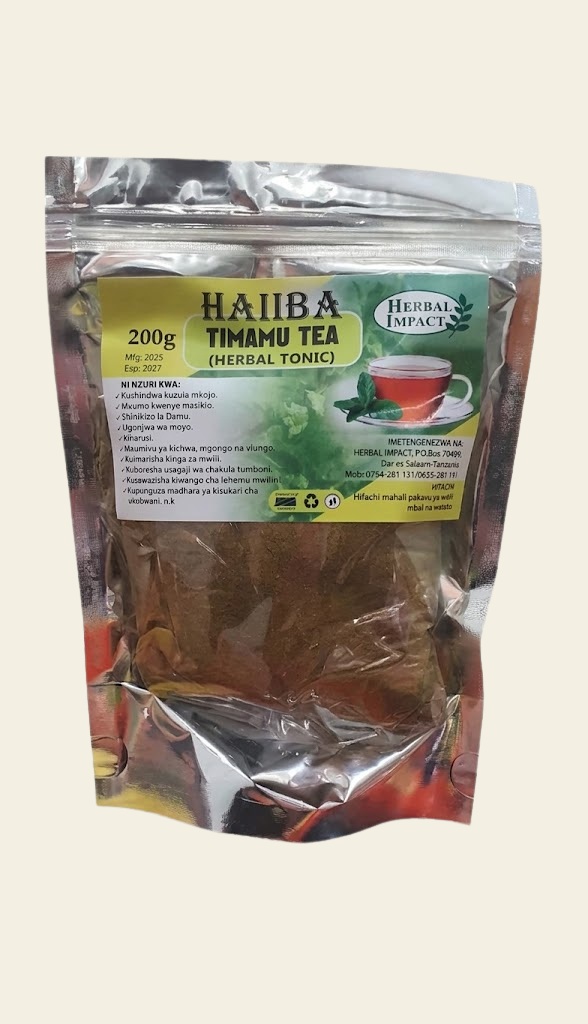
For many people, medical treatment resolves the problem completely. But for others — and this happens more often than you'd think — the issue persists even after seeing specialists and trying conventional treatment. If that's where you find yourself, it may be worth exploring Haiiba Timam Tea, our herbal tonic that has been helping people manage urinary incontinence since 2014.
Real Results
One case that stands out: a client we'll call George, a professional at a major international organization, came to us — through his father-in-law — in real distress. His incontinence had gone completely unresolved despite treatment at some of the country's leading hospitals, and it was putting his job at risk, since he could no longer reliably go to work.
We gave him a 35-day course of Haiiba Timam Tea. His symptoms cleared up in just 14 days.
This wasn't a one-off. Before George, we treated a retiree with the same tea, who later told us: "I couldn't leave the house! I needed to urinate every few minutes, and if I wasn't near a bathroom, I'd have an accident."
Getting Haiiba Timam Tea
Ready to try it? Get Haiiba Timam Tea from our online shop — a 200g pack of our herbal tonic.
You're also welcome to visit us in person at Mosque Street, Kitumbini, Dar es Salaam (opposite the Sunni mosque), or reach us directly by phone/WhatsApp at 0754 281 131 / 0655 281 131.