
5 Everyday Herbs That Belong in Your Wellness Routine
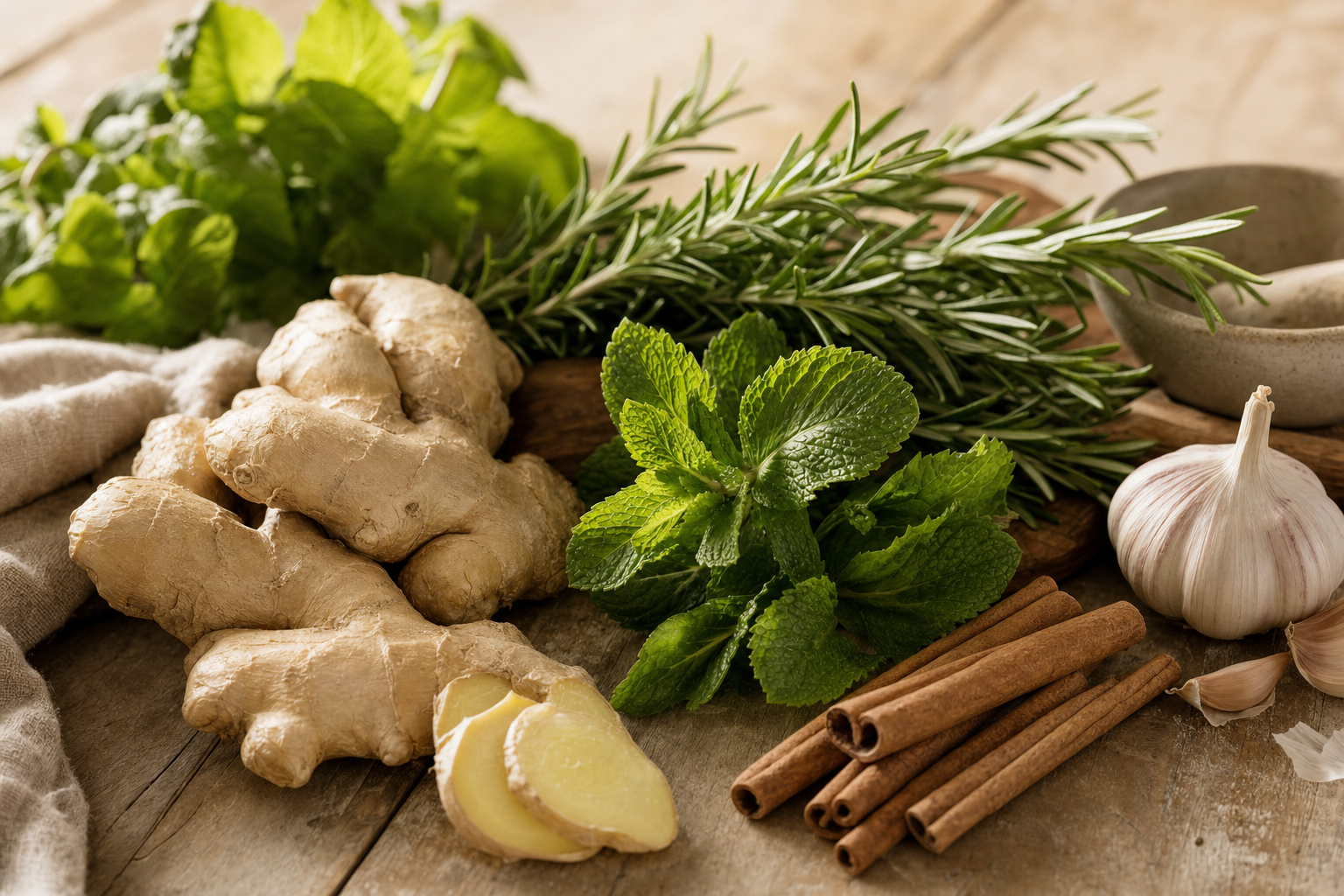
You don't need expensive supplements to support your health. In most parts of the world, local markets and supermarkets are full of natural herbs and spices that people have relied on for generations to support digestion, immunity, and overall vitality. By using a few of these herbs consistently, you can turn your kitchen into a simple, effective wellness hub.
Here are five everyday herbs you can start using more intentionally: ginger, mint, rosemary, cinnamon, and garlic.
1. Ginger: Warming Comfort for Digestion and Immunity
Ginger is one of the most familiar herbs worldwide. You'll find it in teas, soups, stir fries, curries, baked goods, and traditional remedies for colds and stomach upsets. With its warm, slightly spicy taste, ginger supports digestion, circulation, and overall body comfort.
Key wellness benefits
- Supports digestion and helps ease bloating and gas
- Can reduce feelings of nausea, including motion sickness
- Warms the body and may help during colder seasons
- Adds natural flavor without sugar or artificial additives
Simple ways to use ginger daily
- Morning ginger tea: Slice or grate a small piece of fresh ginger, simmer in water for 5â10 minutes, then add lemon and a bit of honey.
- Ginger in hot drinks: Add ginger to your usual tea or herbal infusion for a stronger, more warming drink.
- Cooking with ginger: Use grated or crushed ginger in soups, stir fries, stews, and marinades.
2. Mint / Peppermint: Fresh Support for Digestion and Refreshment
Fresh mint leaves are widely available in produce sections and farmers' markets, and dried mint or peppermint is common in tea blends. Mint is cooling, refreshing, and especially loved for its effect on digestion and its ability to freshen breath.
Key wellness benefits
- Helps ease mild indigestion and feelings of heaviness after meals
- Provides a refreshing, cooling effect in warm weather
- Freshens breath naturally
- Adds a pleasant taste to water, teas, and juices
Simple ways to use mint daily
- Mint tea after meals: Steep fresh or dried mint leaves in hot water for 5â10 minutes, then drink slowly after meals.
- Mint infused water: Add a handful of mint leaves to your drinking water and let it infuse.
- Mint in salads and drinks: Chop mint into fruit or green salads, or blend into juices and smoothies.
3. Rosemary: Focus, Flavor, and Antioxidant Support
Rosemary is a fragrant herb with needle like leaves, commonly grown in home gardens and widely available fresh or dried in grocery stores. Beyond its distinctive aroma, rosemary is valued for its traditional association with brain function and overall vitality.
Key wellness benefits
- Traditionally linked with memory, concentration, and mental clarity
- Contains antioxidant compounds that help protect the body from oxidative stress
- Supports flavorful cooking without relying heavily on salt or artificial flavorings
- Can be used externally in oils for hair and scalp care
Simple ways to use rosemary daily
- Cook with rosemary: Add fresh or dried rosemary to roasted vegetables, potatoes, chicken, fish, or legumes.
- Aroma for focus: Keep a small sprig near your desk; rub the leaves gently and inhale the aroma when tired or unfocused.
- Herbal oil for hair or massage: Infuse rosemary in a carrier oil and use for scalp or gentle body massage, once patch tested.
4. Cinnamon: Warm Spice for Metabolic and Digestive Support
Cinnamon is a popular spice around the world, used in sweet and savory dishes alike. It has a sweet, warming taste and a long history of use in both cooking and traditional herbal practice.
Key wellness benefits
- Supports warmth in the body, especially in colder climates or seasons
- Commonly used in blends that aim to support healthy blood sugar balance
- Adds a pleasant aroma and taste to drinks and foods, often reducing the need for added sugar
- Combines well with other spices like ginger, cloves, and cardamom
Simple ways to use cinnamon daily
- Spiced breakfast: Add cinnamon to oatmeal, porridge, granola, or yogurt.
- Herbal spice tea: Combine cinnamon with ginger, cloves, and cardamom in a homemade herbal tea.
- Smoothies and baked goods: Sprinkle cinnamon into smoothies, fruit bowls, or homemade baked snacks.
5. Garlic: Everyday Immune and Heart Support
Garlic is one of the most powerful medicinal foods you can find, and it's a staple in kitchens across the globe. Besides its intense flavor, garlic has long been used to support immunity and heart health.
Key wellness benefits
- Traditionally used to support the immune system and help the body fight infections
- Often associated with heart and circulatory health
- Offers strong antimicrobial properties when used regularly
- Makes meals more flavorful, which can help reduce reliance on heavy sauces and excess salt
Simple ways to use garlic daily
- Cook with garlic: Chop, crush, or press garlic and add it to vegetables, soups, sauces, grains, and protein dishes.
- Garlic lemon mix: A simple blend of garlic, lemon, and a bit of honey as a traditional immune support remedy.
- Fermented or pickled garlic: Include garlic in pickles or probiotic blends for flavor and potential benefits.
Putting It All Together: A Simple Everyday Herb Routine
You don't need complex schedules or dozens of different herbs. Here's one simple way to incorporate these five herbs into your daily life without feeling overwhelmed:
- Morning: Start with ginger tea, optionally spiced with cinnamon, or a warm bowl of oats with cinnamon.
- Daytime: Drink mint infused water or mint tea after meals; use garlic and rosemary generously in lunch and dinner.
- Evening: Prepare a light herbal tea with ginger, a little cinnamon, and fresh mint, or enjoy a rosemary seasoned meal.
You can adjust this routine to suit your taste, cultural preferences, and schedule. Over time, these small habits add up to better digestion, improved energy, and a stronger sense of daily self care.
Tips for Using These Herbs Safely
- Start with small amounts and notice how your body responds.
- If you have medical conditions, are pregnant, or take regular medication, talk with a qualified health professional before significantly increasing your herbal intake.
- Use fresh, good quality herbs and store dried herbs properly to avoid moisture and contamination.
- Remember that herbs support wellness best when combined with balanced nutrition, sufficient water, regular movement, and adequate rest.
Final Thoughts
Ginger, mint, rosemary, cinnamon, and garlic are more than just flavorings in your kitchen â they are everyday wellness tools that can support digestion, immunity, focus, and overall vitality. By turning these familiar herbs into intentional daily habits, you create a simple, affordable wellness routine rooted in both traditional wisdom and modern lifestyle needs, no matter where in the world you live.